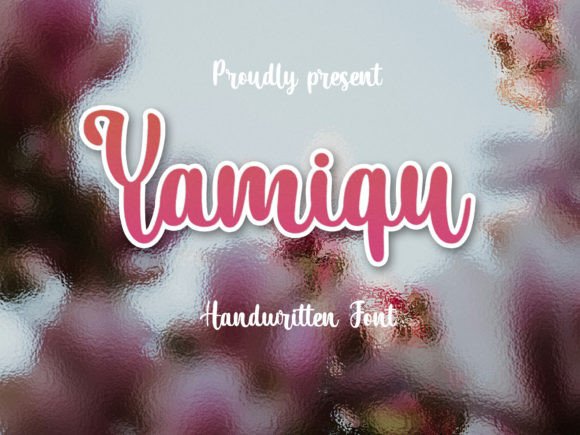
Yamiqu: A Handwritten Font for Modern Branding
There’s a particular kind of visual tension that every designer knows. It’s the struggle between wanting a design to feel personal, human, and approachable, while also needing it to look clean, professional, and intentional. We often chase authenticity with script fonts that can be hard to read, or we default to safe sans serifs that, while legible, can sometimes feel sterile. Finding a typeface that bridges that gap—a font with a genuine, organic touch that doesn’t sacrifice clarity—is like striking gold. This is the space where Yamiqu lives.
Yamiqu is a premium handwritten font crafted for those moments when your project needs a voice, not just words. At first glance, its appeal is immediate. The letterforms have a natural, fluid rhythm, as if drawn by a confident hand with a modern brush pen. But look closer, and you’ll notice the precision. There’s no messy, inconsistent baseline or unpredictable swashes that distract from the message. Instead, Yamiqu offers a seamless blend of straightforward elegance and a distinct, organic character. It’s a creative font that feels both effortless and meticulously considered, making it an incredibly versatile tool in any designer’s or creator’s arsenal.
Where Yamiqu Truly Comes Alive
The real test of any typeface is how it performs in the wild, across different mediums and for different audiences. Yamiqu’s balanced personality allows it to adapt, injecting a fresh, contemporary feel without overpowering the content. Its strength lies in its ability to be a standout display font for headlines and logos while remaining surprisingly functional for shorter blocks of text.
For brand identity and logo design, Yamiqu is a powerful choice. It immediately communicates a brand’s personality as approachable, creative, and genuine. Imagine it on the logo for an artisan coffee roaster, a boutique skincare line, or an independent bookstore. It tells customers there’s a real person behind the brand, someone who cares about craft and quality. This font doesn’t just spell out a name; it conveys a feeling of warmth and authenticity that builds instant connection.
When it comes to editorial design and publishing, think beyond the body copy. Yamiqu is perfect for chapter titles, pull quotes, and section headers in magazines, cookbooks, or lifestyle blogs. It breaks up the monotony of a standard serif font or sans serif font, drawing the reader’s eye and adding a layer of visual interest. For bloggers and content creators, using Yamiqu for post titles or featured graphics on a website can make the entire layout feel more curated and personal, strengthening the site’s overall aesthetic.
The digital landscape is another natural home for this modern typography. In web design, a well-placed use of Yamiqu for a call-to-action button, a hero banner headline, or a testimonial can significantly boost engagement. It adds a human element that a standard web font often lacks. On social media graphics, its charm is undeniable. A quote graphic, a promotional announcement, or a story highlight cover using Yamiqu will stop the scroll. Its clarity ensures the message is instantly readable, even on a small phone screen, while its style ensures it’s memorable.
Don’t overlook its potential in physical applications either. For packaging design, especially for products like handmade goods, gourmet foods, or craft beverages, Yamiqu helps create a shelf presence that feels authentic and high-quality. It pairs beautifully with minimal design, allowing the product to speak for itself. For entrepreneurs creating business cards, thank-you notes, or workshop materials, using this commercial font adds a consistent, professional touch that reinforces their brand’s unique character at every touchpoint.
Working with Yamiqu: Practical Considerations
Choosing the right font is only half the battle; knowing how to use it effectively is what separates good design from great design. Here’s some practical guidance for integrating Yamiqu into your workflow.
First, evaluate the project fit. Yamiqu is not the font for a 500-page legal document or a highly technical whitepaper. Its personality is best suited for projects where emotion, creativity, and connection are key. Ask yourself: Does this project need to feel human? Is it aimed at an audience that values authenticity? If the answer is yes, you’re on the right track.
Next, master the art of font pairing. A handwritten font like Yamiqu shines brightest when it has a clean, quiet partner. A classic, high-contrast serif font like Playfair Display or Lora can create an elegant, sophisticated look. For a more modern, airy feel, pair it with a geometric sans serif font like Montserrat or Lato. The key is contrast: let Yamiqu be the star for headlines and short phrases, and let its partner handle the heavier lifting of body text. This creates a clear visual hierarchy and ensures overall readability.
Before you begin, review the included styles. A quality premium font like Yamiqu often comes with more than just the standard alphabet. Look for stylistic alternates, ligatures, and a full set of punctuation and numerals. These extras are what allow you to fine-tune the typography and make it uniquely yours. A special ligature can turn a simple word into a beautiful piece of design.
Finally, understand the licensing. Since Yamiqu is a commercial font, it’s essential to ensure you have the correct license for your project. If you’re designing a logo for a client, creating merchandise to sell, or using it in a downloadable product, you’ll likely need a commercial license. This protects both you and the font creator and is a standard part of professional practice. It’s a small investment for a design asset that can elevate your work and help build a recognizable brand identity.
In a world saturated with generic visuals, Yamiqu offers a way to stand out with grace and confidence. It’s more than just a collection of letters; it’s a tool for storytelling, a bridge between the digital and the handmade, and a testament to the power of thoughtful design. It proves that you don’t have to choose between being unique and being understood.