Travel Element Collection with Wood Desi: Authentic Design Assets
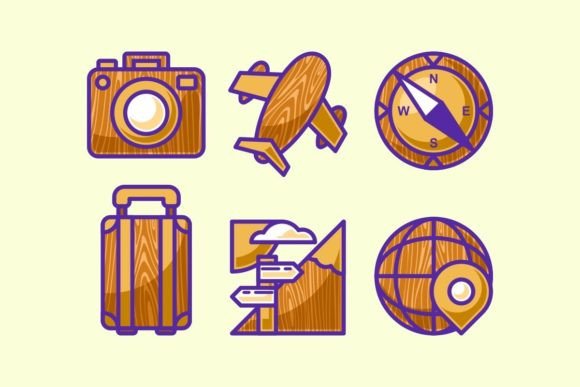
Capturing the rugged, tactile feel of a well-traveled life often requires more than just a standard digital font. When you are designing a menu for a rustic tavern, branding for an outdoor adventure company, or marketing materials for a coffee roaster, you need assets that feel grounded in reality. The Travel Element Collection with Wood Desi is a specialized vector resource designed to bridge the gap between digital convenience and organic texture. It is not just a set of shapes; it is a curated visual language that speaks of warmth, nature, and craftsmanship.
This collection stands out because it rejects the sterile perfection often found in modern vector art. Instead, it embraces the irregularities of wood grain and the worn edges of travel gear. The visual personality of the Travel Element Collection with Wood Desi is distinctly earthy and nostalgic. It evokes the feeling of a stamped passport, a carved cabin sign, or an old explorer’s journal. For designers, this means you are working with assets that already have a story embedded in their aesthetic, saving you hours of trying to manually add "grunge" or "vintage" overlays to clean vectors.
Practical Applications Across Industries
The versatility of this collection allows it to function as a cornerstone for a wide variety of projects. It is particularly effective in sectors where authenticity is a currency. For branding and logo design, these elements provide a distinct advantage. A craft brewery, a surf shop, or a bespoke leather goods store can build an entire brand identity around the textures found in this pack. The wood grain elements work beautifully as background fills for business cards or as framing devices for signage.
In the realm of packaging design, the collection shines. Consumers are drawn to products that look handmade and high-quality. Using elements from this collection can transform a generic label into something that looks like a premium font companion, suggesting that the product inside is crafted with care. Web design also benefits greatly from these assets. While you should avoid heavy loading times, using these vectors for section dividers, background textures, or hero image overlays can break the monotony of flat, minimalist web layouts.
Editorial design and publishing professionals will find this collection invaluable for travel magazines, hiking guides, and lifestyle blogs. The assets can be used to create dynamic layouts that guide the reader's eye. For social media graphics, where stopping the scroll is paramount, the textural contrast of wood elements against a clean background creates immediate visual interest. It helps small businesses and content creators maintain a consistent, recognizable aesthetic across platforms like Instagram and Pinterest.
Technical Quality and Format Advantages
One of the most significant selling points of the Travel Element Collection with Wood Desi is its technical delivery. The package includes vector format files, specifically AI and EPS versions. This is a critical distinction for professional work. Unlike raster images (like JPEGs or PNGs), vectors are mathematically defined, meaning there is no size limit. You can scale these elements to the size of a billboard or shrink them down for a favicon without losing a single pixel of quality.
The inclusion of AI and EPS files ensures compatibility with industry-standard software like Adobe Illustrator. This allows for deep customization. You are not stuck with the pre-set colors or layouts. You can edit the anchor points, change the color palette to match a specific client’s brand identity, or combine different elements to create entirely new compositions. This flexibility is what separates a basic "clipart" download from a professional design asset.
Integrating Texture with Typography
Using the Travel Element Collection with Wood Desi effectively requires a thoughtful approach to typography. Because the wood elements are visually heavy and textured, they demand a typeface that can hold its own. A delicate, thin sans serif font might get lost against a detailed wood grain background. Instead, consider pairing these elements with a bold display font or a sturdy serif font. These font styles have the structural integrity to sit on top of textured backgrounds without sacrificing readability.
Alternatively, if you are aiming for a whimsical or artistic vibe, a script font or handwritten font can work, provided the contrast is managed correctly. The key is to ensure that the text remains the focal point of the communication, while the wood elements serve as the supporting atmosphere. When used correctly, the texture enhances the message rather than obscuring it. This balance is a hallmark of good modern typography and layout design.
Strategic Value for Creators and Businesses
For entrepreneurs and small business owners, this collection represents a high return on investment. Instead of commissioning custom illustrations for every seasonal campaign, you can utilize these assets to create fresh visuals quickly. It empowers marketers to produce high-quality collateral in-house, maintaining control over the visual output while reducing costs.
The "freebie" nature of this specific offer makes it an even smarter starting point. It allows you to test the waters and see how the style resonates with your audience before investing in more extensive libraries. Whether you are a crafter designing invitations or a publisher laying out a magazine spread, the Travel Element Collection with Wood Desi provides the tools to add depth, history, and character to your work. It transforms flat designs into immersive visual experiences, helping you connect with an audience that values authenticity and quality.