Allura Kriya: A Guide to This Elegant Script Font
There is a specific moment in the design process where you need a typeface to feel human. You have the clean sans serif for the body copy and the bold serif for the headlines, but the project lacks warmth. It needs a personal touch, a signature. This is where Allura Kriya enters the conversation. It is not just another script; it is an elegant and dainty handwritten font that bridges the gap between casual handwriting and polished typography. For designers, entrepreneurs, and content creators, understanding how to wield a font like this can be the difference between a generic layout and a memorable brand identity.
Deconstructing the Visual Personality
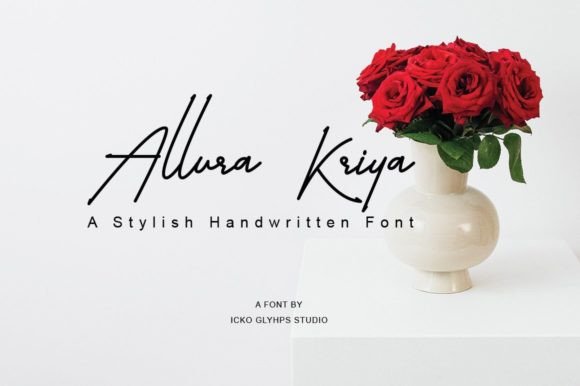
When you first look at Allura Kriya, the immediate impression is one of sweet delicacy. Unlike heavy, grunge-style scripts or overly formal calligraphy, this typeface strikes a balance. It features smooth, flowing strokes that mimic the natural pressure of a pen on paper. The "sweet and delicate accents" mentioned in its description are visible in the soft curves of its letterforms. There is a distinct lack of harsh angles; instead, the terminals taper off gently, creating a rhythm that feels organic.
The visual character of Allura Kriya is defined by its legibility within the script genre. Many handwritten fonts sacrifice readability for the sake of artistic flair, connecting letters in ways that force the reader to squint. Allura Kriya avoids this trap. The spacing between letters is thoughtful, allowing the eye to move quickly across words. This makes it a versatile display font. It captures the essence of modern typography—clean enough to be professional, yet loose enough to feel approachable. It doesn't scream for attention; it invites the viewer in with a whisper.
Strategic Applications: Where Allura Kriya Belongs
Choosing the right creative font is about context. A typeface that works beautifully on a wedding invitation might fail miserably on a technical report. Allura Kriya finds its sweet spot in projects that require a human connection. Because it is a premium font, it carries a level of refinement that free alternatives often lack, making it suitable for high-stakes commercial work.
Branding and Identity
For small business owners and entrepreneurs, brand identity is everything. If your brand values elegance, femininity, artisanal quality, or personal care, Allura Kriya is a strong candidate. Think of a boutique bakery, a high-end florist, a skincare line, or a personal stylist. Using this script font for a logo design can instantly communicate these values without saying a word. However, a logo is just the start. The font carries that personality through to business cards, letterheads, and packaging design. It turns a standard invoice into a piece of correspondence that feels like it came from a real person, not just a machine.
Digital and Editorial Use
In the realm of web design and editorial design, Allura Kriya serves as a powerful accent tool. It is rarely a good idea to use a handwritten font for long-form body text on a website; the eye fatigue sets in quickly. Instead, use it for pull quotes, sub-headers, or "click to read more" buttons. In editorial design, such as magazine layouts or blog graphics, it works beautifully for drop caps or bylines. For social media graphics, where you have seconds to capture attention, this font adds a layer of personality that static, standard fonts cannot match. It helps stop the scroll, particularly for lifestyle, travel, or food content.
Publishing and Stationery
Publishers and authors often look for fonts that evoke emotion. Allura Kriya is an excellent choice for book covers in the romance, memoir, or self-help genres. The dainty nature of the font suggests intimacy and storytelling. Similarly, for stationery designers, this typeface is a workhorse. It excels in greeting cards, wedding invitations, and planners. It provides that "handmade" aesthetic that customers love, but with the consistency and scalability that only a digital font can provide.
The Psychology of the Typeface
Typography is silent communication. The font you choose influences how your audience perceives your message before they even read the words. Allura Kriya influences brand perception by signaling softness and attention to detail. When a customer sees a product packaged with this font, they often subconsciously associate it with care and quality.
This contributes to audience engagement. A sterile, corporate sans serif might be efficient, but it doesn't build a relationship. A font like Allura Kriya feels personal. It suggests that a human being is behind the brand. This is crucial for small business owners competing against large corporations. You cannot out-spend them, but you can out-care them, and your typography is a primary vehicle for showing that care. It builds recognition; once a customer associates that specific style of handwriting with your products, they can spot you from a distance on a shelf or in a crowded social media feed.
Practical Guidance for Designers and Creators
Integrating Allura Kriya into your workflow requires a bit of technical know-how and design strategy. It is not just about dropping the font onto a canvas; it is about making it work within a system.
Mastering Font Pairing
The most common mistake with script fonts is pairing them with the wrong partner. Because Allura Kriya is decorative and has a strong personality, it needs a grounding force. You generally want to pair a script font with a neutral sans serif font or a sturdy serif font.
- The Modern Look: Pair Allura Kriya with a clean, geometric sans serif (like Montserrat or Lato). The contrast between the organic script and the rigid geometry creates a modern, dynamic tension.
- The Classic Look: Pair it with a transitional serif (like Garamond or Baskerville). This creates a timeless, sophisticated vibe suitable for wedding stationery or luxury branding.
Avoid pairing it with other display fonts or overly decorative typefaces. The goal is contrast, not competition.
Readability and Hierarchy
As a display font, Allura Kriya should be used for impact. Use it for headlines, short phrases, or call-to-action text. When setting the font size, ensure it is large enough to showcase the details of the brush strokes. If you use it too small, the delicate accents will blur together, especially on lower-resolution screens.
Establish a clear visual hierarchy. If your headline is Allura Kriya, your sub-headline might be a bold sans serif, and your body copy a regular weight sans serif. This guides the reader’s eye naturally through the content, ensuring they see the most important, stylistic elements first.
Licensing and Technical Review
Before finalizing a design, always review the technical aspects of the design assets. Since this is a commercial font, check the licensing terms. Does the license cover web embedding? Does it cover merchandise if you are creating print-on-demand products? Most premium fonts have different tiers for personal and commercial use.
Additionally, check the character map. High-quality fonts often include OpenType features, ligatures, and alternates. These are variations of the same letter that prevent repetition. For a handwritten font, using alternates is vital to maintain the illusion of natural handwriting. If every "o" looks exactly the same, the text looks mechanical. Toggling these stylistic alternates in your design software will elevate the final product.
Conclusion
Allura Kriya is more than just a collection of glyphs; it is a tool for adding humanity to digital projects. Whether you are crafting a brand identity for a new startup, designing social media graphics, or laying out a book cover, this font offers a blend of elegance and approachability. By understanding its strengths—its delicate visual style and its ability to connect emotionally with an audience—and pairing it wisely with complementary typefaces, you can use Allura Kriya to create professional, polished, and deeply personal designs.